
There are quite a few things in Hong Kong that an ordinary tourist might just not know about and would definitely regret if they missed something. To know which local products will make your trip truly unforgettable, I have prepared this list. Take note!
Jade
If you can’t afford real jade, then the jade market in Yau Ma Tei, where synthetic jade is sold, is an affordable alternative. This indoor market has 400 stalls selling a wide range of jade pendants, rings, bracelets, carvings, and jewelry.
Prices start at HK$15 and rise to the amount that sellers believe they can receive from the buyer. Always bargain to half the price or less to come to an acceptable compromise. As soon as you start haggling, it will be rude to refuse to buy, so enter into negotiations only if you really intend to buy the product. Be careful, not all the stones sold on the market are natural.
The top quality jade has a pure green color and is very expensive. Most stones may have a yellow tint, but the finished product should be devoid of brown or gray color. The best jade is translucent, while opaque jade with cloudy spots is usually of lower value. The Chinese name for jade translates to “beauty” and “purity.” This stone symbolizes a long life and good health, which is why many adherents of traditions wear jade to protect against diseases.
The jade Market is located on Kansu and Battery Streets. The opening hours vary among the 400 vendors, but the market is usually open daily, from 9 a.m. to 5:30 p.m. Nearby is Jade Street, located on Canton Road between Kansu Street and Jordan Road. The shops on this street are open from Monday to Saturday from 10 a.m. to 4 p.m. A giant jade stone weighing three tons serves as a landmark at the intersection of Canton Road and Jordan Road.
Chinese tea
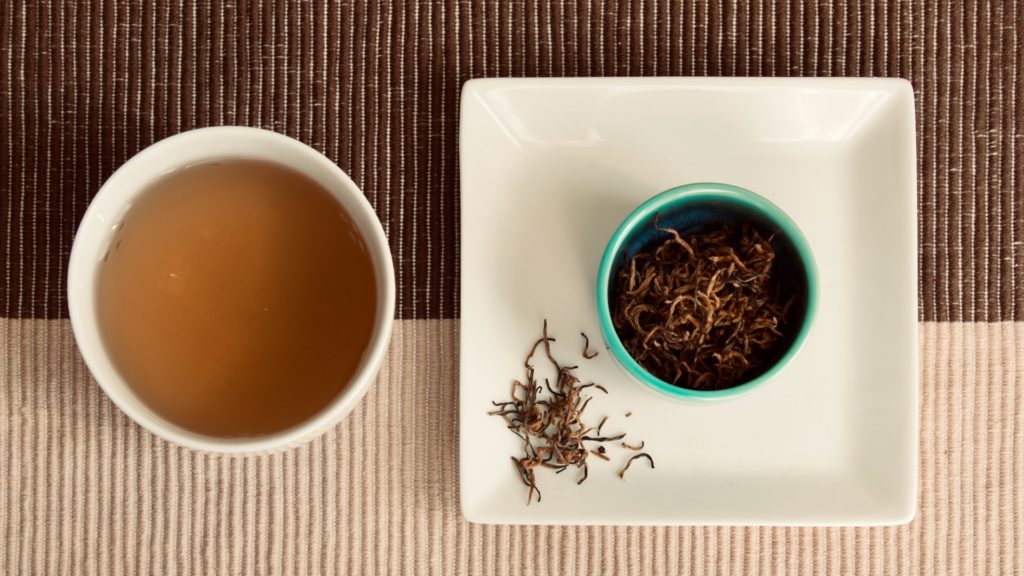
The origin of tea is controversial, but the earliest written sources attribute the first tea brewing to China in the 10th century BC. Tea comes in different quality and varieties, which is reflected in its price. Those who do not have sufficient knowledge about tea should buy tea from trusted sellers to make sure that they are buying a real product.
Tea can be bought anywhere in Hong Kong, but tourists flock to Ying Kee Tea House to taste dim sum and tea. Since 1881, Ying Kee has become synonymous with quality tea leaves that are well-transported. This establishment sells a variety of teas, from typical black, green, and white varieties to weight-loss and mist teas that are atypical for Western tastes.
Tea prices depend on the quality and range from HK$6 per ounce to HK$18,000 per pack. Ying Kee also offers tea sets and tableware for enthusiasts who want to host traditional tea ceremonies at home. Ying Kee has 13 stores spread across the main areas of Hong Kong, Hong Kong Island, Kowloon and the New Territories.

Chinese Mailbox
Traditional Chinese mailboxes have almost disappeared in Hong Kong, but they can be found in tiny villages scattered across its many islands. I recommend buying it for HK$38-40 in small villages like Tai O. These square metal tins used to hang at the entrances to houses and villages, but since then they have been replaced by more reliable mailboxes, reminiscent of Western ones.
The contents of the drawer remain unprotected from external influences, which makes it more ideal for indoor decoration rather than outdoor use. The boxes are typically 32 cm (H) x 18 cm (W) x 4 cm (D) compact enough to fit in most suitcases and light enough to overcome the weight restrictions of the major airlines. In small antique shops, these mailboxes are sold for tourists and memorabilia lovers.
These antique mailboxes can be found along Tai O Wing On Street at a store called Wing On Department Store. Don’t confuse it with a giant department store, it’s a small store next door.
Shrimp paste
Shrimp paste is a condiment that is made by families in coastal villages. Hong Kong has a long history of producing shrimp paste. The paste is made from dried fermented crushed shrimp. Not intended for immediate consumption, shrimp paste should be fully cooked before use, as it is raw. The paste is a light pinkish-gray liquid with a pungent aroma, although higher grade pasta usually has a milder odor. By itself, the very salty shrimp paste is a common ingredient in local roasts and sauces, as an addition to salt and flavor enhancer.
Shrimp paste is sold in cans of different sizes and at different prices. Small jars are sold for HK$22, medium jars for HK$27, and large jars for HK$32. The shrimp paste companies in these coastal villages are small family-owned businesses that have been operating in the industry for over 60 years.
The best places to buy high-quality shrimp paste are coastal villages. For example, Tai O fishing village boasts the best shrimp paste in Hong Kong. Two well-known manufacturers are located a few blocks from each other. Yick Cheong Seafood Company has been around for over 60 years. Their shrimp paste is prepared daily in the kitchen adjacent to the store. Opening hours are from 9 a.m. to 6 p.m. daily, the store is located at 44-48 Wong On Street, Tai O. Another manufacturer, Cheung Choi Kee, has been operating on the market for over 40 years. Their shrimp paste is also produced in the adjacent family kitchen. Opening hours are from 7 a.m. to 6 p.m. daily, and you can find them at 41 Kat Hing Front Street, Tai O.
Religious mascots from local temples
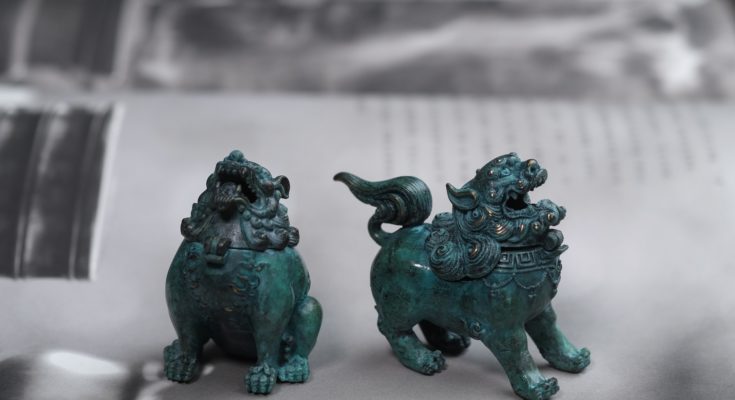
A tour of Hong Kong would not be complete without visiting one of its many ancient temples and buying a souvenir to remember the visit. Hong Kong is rich in history, there are temples here that appeared hundreds of years ago, back during the Yuan Dynasty. Although these temples have been restored and changed to such an extent that they barely resemble their former selves, the land beneath them is still sacred and filled with the spiritual power of believers 🙂 Such temples are known for their talismans of good luck, wealth, prosperity, health and similar wishes.
These amulets are popular among both tourists and locals. The mascots have a variety of designs and wishes for prosperity. Regardless of whether a person is a believer or not, these key rings are compact, affordable and reminiscent of ancient traditions. Popular Chinese zodiac key rings cost HK$38, and good luck key rings cost HK$18-88. Jade amulets can cost up to $268.
Most temples offer amulets of varying design, cost, and effectiveness, but well-known temples tend to offer more variety and higher quality. Che Kung Temple, located near Tai Wai, in Sha Tin district, New Territories, is one of the most famous temples in Hong Kong and offers such amulets at fairly high prices. The temple is open to believers and tourists from 7 a.m. to 6 p.m. daily. Entrance to the temple is free, but it is customary for visitors to donate money to maintain the temple.

Soy milk
Soy milk, the best option for people with lactose intolerance, was created in China during the Han Dynasty. The popularity of soy milk has reached global proportions due to its beneficial properties and high protein content. Since the practice of packaging and preservation has become widespread, soy milk has become readily available and has a longer shelf life.
Vitasoy is a beverage brand that originated in Hong Kong. Since 1940, Vitasoy has been creating soy drinks for fans of a healthy lifestyle as an alternative to carbonated drinks popular abroad. Since then, Vitasoy has been producing other flavors and juices, but its legendary soy drink is still the most popular.
Currently, its packaging is a whitish soy cardboard box with blue lettering. Various packaging options include glass bottles, PET bottles, Tetrapak boxes, and aluminum cans. Plus, glass bottles have recently returned to fashion.
A pack of 6 Tetrapak boxes can cost HK$25.10. From the point of view of taste, you can take a soy drink with a high sugar content, at the same time there is a healthier option with a reduced sugar content. Vitasa is easy to buy at any supermarket, store, canteen, local cafe or store for mothers and grandmothers. Supermarkets are the best place to shop. For example, Wellcome is one of the most inexpensive supermarkets in Hong Kong, with more than 300 stores in the city. Opening hours are usually 8 a.m.-10/11 p.m., depending on the store.
Mooncake
Moon cakes are a seasonal delicacy that is served during the Mid-Autumn Festival. High-calorie moon cakes are intended for sharing with family and friends, as is customary on this holiday. Mooncakes are round or rectangular cakes with a thick filling, usually made from lotus seeds, surrounded by a relatively thin crust, which is imprinted with Chinese characters denoting longevity or harmony, as well as the store’s logo or the motif of mid-autumn. Traditional moon cakes contain the yolks of salted duck eggs. Many bakeries in Hong Kong create their own homemade moon cakes, which vary in taste and popularity.
One of the most famous bakeries where mooncakes and other traditional Hong Kong pastries are made is Kee Wah. Kee Wah is a family-owned bakery that has grown to a national scale since its founding more than 70 years ago. She specializes in traditional Hong Kong pastries such as mooncakes, wedding cakes, egg rolls and more. Kee Wah is a one-stop shop where you can try old Hong Kong snacks, as well as mooncakes and cakes for brides. A jar of 4 Kee Wah moon cakes is priced at HK$228.
Kee Wah developed from the very beginning as a small neighborhood grocery store on Shanghai Street in Yau Ma Tei. Kee Wah has expanded its operations throughout Hong Kong and now has more than 50 locations throughout the city. Unfortunately, the very first store has long been gone, but visitors can purchase traditional Hong Kong pastries at two airport terminals: Terminal 1 – Unit 7T095, Level 7, Terminal 1, Hong Kong International Airport, open from 7 a.m. to 11 p.m.; and Sky Plaza – Unit 5P034, Terminal 2 (Sky Plaza), Hong Kong International Airport, open from 8 a.m. to 11 p.m.
Goji berries
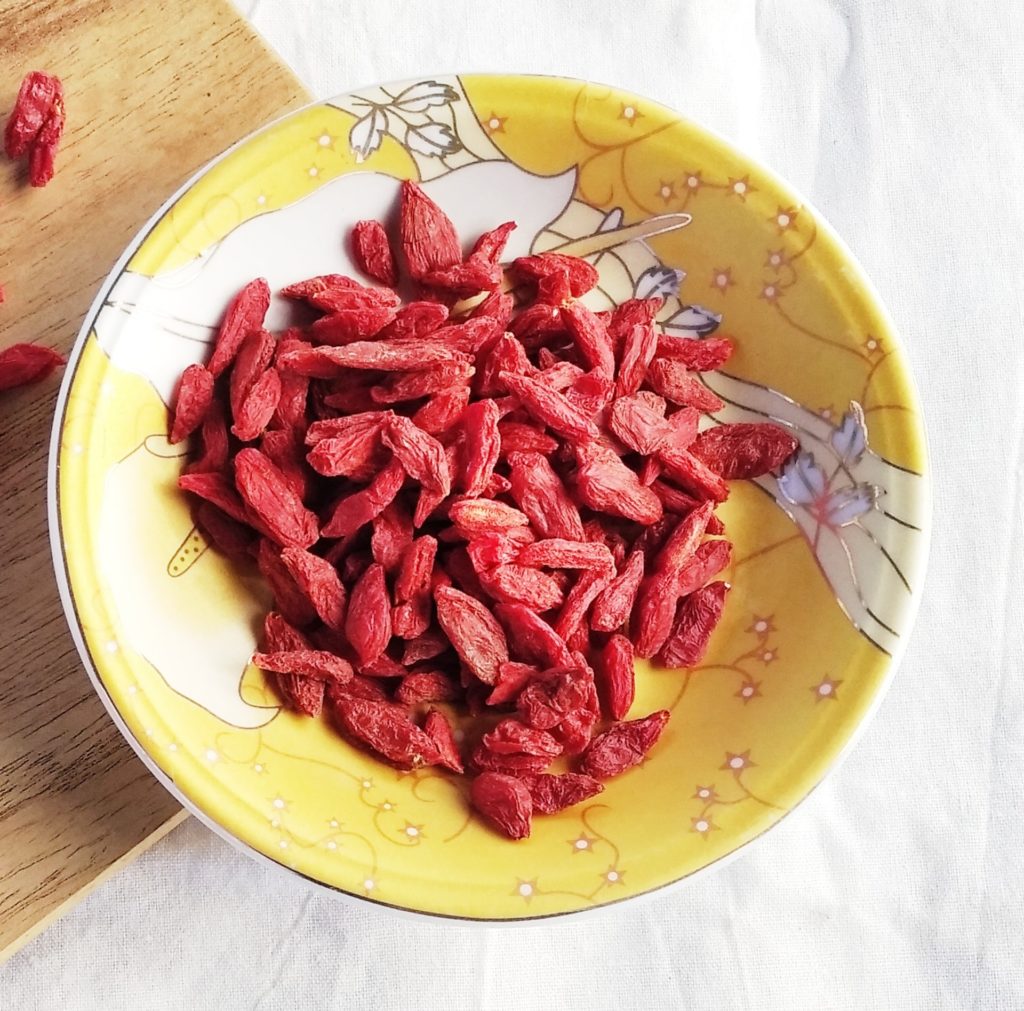
The history of traditional medicine began in China, but many of its reliable methods and ingredients were introduced in Hong Kong. Goji berries, which are also sometimes called wolf berries, are often found in dried form and added to food and drinks to enhance their nutritional value. Goji berries are boiled before use. They are added to rice porridge, dessert jellies, Chinese tonic soups, and herbal teas. Goji berries have a mild tart taste, slightly sweet and sour. They resemble raisins in shape and texture. They are known to improve health, strengthen the immune system, and increase life expectancy and vitality.
Goji berries are one of the most affordable health supplements in Hong Kong, and they can be purchased at retail for HK$40 to HK$80 per pack, depending on the volume. Goji berries can be found in many shops throughout the city, they are easily accessible to lovers of a healthy lifestyle. A notable street where goji berries are sold in every store is Wing Lok Street in Sheng Wan district. This street is one of the main arteries for the trade of dried products, ranging from seafood to herbs. Notable stores include the following: Wah Cheong, 204 Wing Lok Street, open from 9 a.m. to 7 p.m.; and Wing Sing Sum, 130 Wing Lok Street, open from 9:30 a.m. to 7 p.m.
You can also buy cats with a waving paw, fans, chopsticks and magnets)
Alex iurlov tour guide in Hong Kong, Macau and China Car transfers, yacht charters. +85268553629 (WhatsApp, Telegram, Wechat) Wechat id: iurlov info@hongkong.su www.hong-kong.su www.tour.hong-kong.su www.yachts.hong-kong.su www.alphard40.hk www.yurlov.com – my personal web site