
Hong Kong, one of the most unique places on Earth, seems to have been specially created in order to one day become a tourist Mecca. Everything is extraordinary here: location, landscapes, climate, vegetation.
It is not always appropriate to talk about Hong Kong exclusively as a part of the land, since this Administrative Region of the PRC occupies the Kulun Peninsula and adjacent New Territories from the north, Hong Kong Island (or Hong Kong Island) and more than 230 surrounding islands of the South China Sea. It is precisely this unusual location that determines the climatic features of Hong Kong. And the great thing is that Hong Kong remains one of the most attractive vacation destinations in almost any season.
Hong Kong climate
Hong Kong’s climate is more typical of the subtropical zone.
It is worth noting that in East Asia, the length of the seasons is somewhat different from the usual for Europeans. For example, spring lasts only 2 months here: March and April. But there are six summer months! What is not the place of eternal summer: May, June, July, August, September and October are the summer months in Hong Kong. But autumn is characterized by an amazing transience: a short period from the beginning to the end of November – and autumn has passed. But winter is similar to ours: all the same December, January and February.
Seasonality in East Asia is clearly linked to the frequency of changing wind directions, and therefore each season, as a rule, has fairly clear characteristics: temperature, humidity, and average precipitation.
Summers are hot and humid. May and June are good times for relaxing on the beach, diving and yachting. The average daytime air temperature ranges from 26 to 32 degrees Celsius, and the water temperature is 25-27 degrees. The maximum summer air temperature recorded in the territory of the administrative region was 38 degrees Celsius. The night usually brings coolness: the temperature drops to 22.8-26 degrees Celsius. Summer has the highest rainfall: 155-444 mm. At the same time, August holds the record for the number of rains and thunderstorms.
In autumn, the heat is decreasing. Sunny weather is gradually setting in, with daytime temperatures from 19 to 25.5 degrees Celsius comfortable for walking around the city. Autumn is a unique time when the temperature of coastal waters practically does not differ from the air temperature and reaches 23-24 degrees Celsius. It is not surprising that November is considered the most favorable time to arrive in Hong Kong, when the period of winds and rains ends, but the rays of the sun are still gentle and give warmth. The amount of precipitation at this time of the year is minimal – no more than 35-36 mm.
The coldest month of the year in Hong Kong is January. It’s monsoon time. The average temperature in January is from +15.6 to +18 degrees Celsius, although there are frosts at this time of the year. The record low January temperature recorded in these places was -4 degrees Celsius. Temperatures near zero are also very rare in Hong Kong. The last time the Hong Kong Observatory recorded a temperature of 0.0 degrees was in January 1893. But December is considered the period characterized by the highest atmospheric pressure (the lowest is in August). The amount of precipitation in winter is insignificant: 25-35 mm.
Spring is the flowering period. This is a great time to walk, explore local attractions, and visit Hong Kong’s many gardens and parks. And although the first month of spring is traditionally rich in rains and morning mists (precipitation amounts up to 191 mm), its average daytime temperature is quite comfortable: from 22 to 26 degrees Celsius. The temperature of the air at night and the water during the day is from +17 to +20 degrees.
It is worth noting that extremely strong typhoons and hurricanes, which quite often visit the East Asian region from July to September and bring a lot of troubles and misfortunes, are quite rare visitors to Hong Kong.
12 months in Hong Kong
November. Hong Kong November weather
November is the perfect month to explore Hong Kong. Autumn in East Asia is the time when the period of tropical hurricanes is coming to an end, the summer heat is replaced by mild warmth, and during the day the thermometer rarely rises above +25 degrees Celsius. The nights are quite warm, but not stuffy, with temperatures of +18, +21 degrees. The water on the coast remains quite warm at this time of the year: about +20, +21 degrees, both during the day and later at night.
The precipitation level decreases many times in comparison with summer and rarely exceeds 35 mm, and the air humidity is 65-70%. November in Hong Kong is considered to be a month of clear and sunny weather. As a rule, no more than 4-6 rainy days are recorded throughout November. Monsoon winds may blow for 3-5 days. The average atmospheric pressure in November is no more than 765 mmHg.
Autumn in Hong Kong is an ideal time for leisurely walks: on foot, on a yacht or boat, by bike or helicopter (this type of exploring the sights of both Hong Kong City and the entire administrative region is becoming increasingly popular).
Locals believe that it is in November that the most wonderful view of the city opens from the observation deck of Victoria Peak, and tourists who have visited Hong Kong more than once recommend that friends spend as much time as possible visiting parks with exotic plants in November and definitely visit Ocean Park with a zoo, one of the most famous Asian aquariums and one of the most famous amusement park areas.
December. Hong Kong December weather
December, which is considered to be a fairly cool month in East Asia, seems quite warm to Europeans accustomed to more severe winters. The average air temperature in December is +16, +18 degrees Celsius.
At this time, rains are extremely rare, thunderstorms and morning mists become very infrequent in winter. The wind direction is westerly or southwesterly.
Monsoons sometimes visit Hong Kong in December, but no more than 3-5 times a month. The average monthly precipitation is 35.5 m. During the day, the air humidity is about 60-75%. The water temperature in the vicinity of the coastal zones is about +17 degrees. December has the lowest atmospheric pressure, with an average of 765 mmHg.
It is this calm, mild weather that is ideal for exploring the sights of the Hong Kong metropolis, and for visiting the most remote corners of the Hong Kong Administrative Region. For example, the so-called New Territories.
Why not visit the former fortress village of Kam Kam Tin, founded by the descendants of the ruling Sunn dynasty, or the Buddhist monastery with the memorable name “Ten Thousand Buddhas.” The monastery is located on the outskirts of the former village of Shatin. The way to the temple is not easy – it is reached by a fairly steep staircase with 431 steps. However, patience and endurance will be rewarded: the monastery consists of several amazingly beautiful temples, each of which has its own patron deity. It is worth noting that the name “Ten Thousand Buddhas” was not given to the temple complex by chance. Many different statues depicting the Buddha are one of the main decorations of the main temple. Locals claim that at least 13 thousand statues have been collected here.
Tourists who have repeatedly visited Hong Kong also know that there are many fish markets in the area of the New Territories, where, if desired, you can buy any marine exotic – from fairly large octopuses to moray eels or rock fish.
For nature lovers, a trip to the northeastern edge of the New Territories may be of particular interest, to the place where the Mai Po Reserve has been located on the shore of Deep Bay since 1995, and every winter, whole flocks of migratory birds gather for recreation when flying from North Asia to Australia – about 350 species of birds, among which there are quite rare.
January. Hong Kong weather in January
January – the real cold weather starts in Hong Kong this month. That’s what the residents of this administrative region think. You bet! During the day, outdoor thermometers rarely show more than 18.5 degrees Celsius, and sometimes the air temperature drops to +14, and even to +12. A little over 110 years ago, the staff of the Hong Kong laboratory even recorded the moment when the January temperature was 0.0 degrees Celsius.
The water temperature in the coastal area is +16, +18 degrees. January is considered one of the driest and clearest months of the year. The average monthly precipitation is only 29.4 mm.
Relative humidity is also very different from summer humidity: at night it is 77%, during the day it is about 64%.
In January, there is practically no threat of the arrival of tropical cyclones. Even monsoon winds are becoming rare. Westerly as well as southwesterly winds prevail, with speeds rarely exceeding 3 m per second. The average atmospheric pressure is 765 mmHg.
The whole month is favorable for walks and excursions. And also for shopping. And the latter is facilitated not only by weather conditions, but also by the arrival of the discount season, which begins in Hong Kong after the Christmas celebrations and lasts until the first days of the Chinese New Year. These days, at grand sales, you can buy household appliances, computer and mobile devices and accessories, as well as real branded clothing and accessories from famous fashion houses, for 30-50-70% cheaper.
And, of course, many tourists travel to East Asian countries in January in order to witness the fantastic extravaganza of light, colors and sound, which annually marks the arrival of the New Year in China according to a specific eastern calendar – the first day of the first moon in mid–January – early February. In Hong Kong, the holiday begins with a magnificent fireworks display on the coast in Victoria Bay.
In January, Hong Kong holds an annual alternative art month. The festival gathers young and well-known groups from Europe, Asia and America: actors, musicians and artists.
January is considered to be the coldest month in Hong Kong. January rarely gets precipitation, so it is considered the driest month of the year. Most of the days are bright, but cloudy and cloudy days are also common.
The general weather situation in Hong Kong in January looks like this:
Average daytime temperature: 18.7°C
Average temperature at night: 14.4°C
Number of sunny days: 14 days
Number of rainy days: 1 day
Sea water temperature: 17.9°C
Precipitation: 24.0 mm
Hong Kong January weather data in recent years
In January 2016, there was a slight weather anomaly in Hong Kong, and the temperature dropped to 1 °C for a couple of days at night. During the day, it was also quite cold these days, only about 6°C. Of course, it was very cold at that time, especially on the coast with windy weather. The highest temperature in January was recorded at the beginning of the month, when the temperature reached 23 °C during the day and about 20 °C at night.
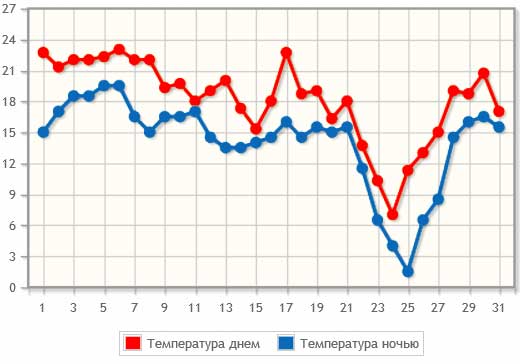
In January 2015, the highest daytime temperature was recorded at 25°C, the lowest temperature was 15°C. As for the temperature at night, the highest recorded value is 20°C, and the lowest is 13°C.
The average temperature in January 2015 was 20°C during the day and 15°C at night.
In January 2014, the highest daytime temperature was recorded at 27°C, the lowest daytime temperature was 16°C. As for the night temperature, the highest night temperature was recorded at 22°C, and the lowest night temperature was recorded at 11°C.
The average temperature in January 2014 was 21°C during the day and 16°C at night.
Hong Kong water temperature in January
The average water temperature in Hong Kong in January 2016 was 18.9°C.
The maximum temperature is 19.5°C
The minimum temperature is 18.4°C
In January 2016, the average water temperature is 2 degrees higher than in previous years. For example, in 2014, the minimum temperature was 16.3°C, while the average temperature was only 17.3°C.
January is definitely not suitable for swimming in Hong Kong.
Precipitation in Hong Kong in January
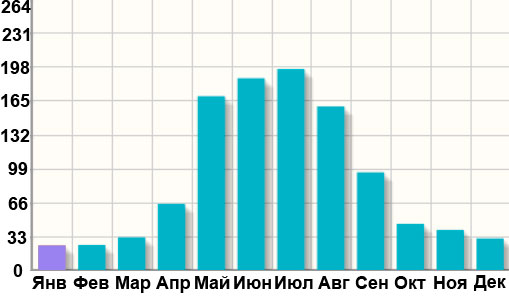
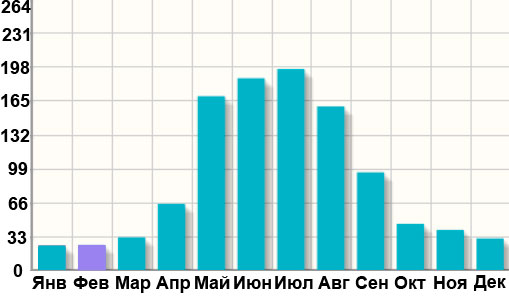
In January, the minimum amount of precipitation falls in Hong Kong – only 24 mm. This makes January the driest month of the year.
February. Hong Kong weather in February
February daytime temperatures differ little from January – on average, they are +16, +18.6 degrees. Monsoon winds are rare this month, but a slight increase in westerly and southwesterly winds is possible. Southern cyclones do not bother East Asians at this time.
In comparison with December and January, precipitation increases significantly in February (up to 53 mm). According to forecasters, it rains an average of about 80 hours this month, but clear and sunny weather accounts for at least 94 hours. Although in the last winter month, the probability of thunderstorms and morning fogs increases. Relative humidity at night is at least 82%, during the day – about 71-72%.
Atmospheric pressure, as a rule, is kept at around 764 mmHg.
February is usually the time of the main New Year celebrations. And therefore, the month is absolutely not suitable for shopping: during the New Year celebrations in China, all industrial goods stores and shops are closed.
However, is it worth getting upset over such small things? After all, it is during the New Year weeks that you can witness numerous rituals and festive ceremonies, festive processions and amazing shows.
And for gourmets, this time is just perfect. In the first two weeks of the holiday, numerous cafes and restaurants often offer a special festive menu, including dishes that are unlikely to be tasted on normal days. In addition, Chinese restaurants offer a wide range of traditional Cantonese, Beijing, Sichuan, Hunan, and Chiu Chow dishes at any time.
It is in February, on the fifteenth day of the new moon, that one of the most beautiful oriental holidays takes place in China: the Lantern Festival, or Yuen Xiu.
February is an amazing month in Hong Kong. On average, the temperature is 2 degrees higher than in January, weather anomalies are less frequent, and it still rains quite rarely. February is very good for visiting Hong Kong, if not for the fact that Chinese New Year is most often celebrated this month. In this regard, the streets become very noisy and very crowded, but, however, for many people this is more a plus than a minus. There are often more cloudy and cloudy days in February than in January.
The general weather situation in Hong Kong in February looks like this:
Average daytime temperature: 20.5°C
Average temperature at night: 16.5°C
Number of sunny days: 7 days
Number of rainy days: 2 days
Sea water temperature: 18.6°C
Precipitation: 24.5 mm
Hong Kong February weather data in recent years
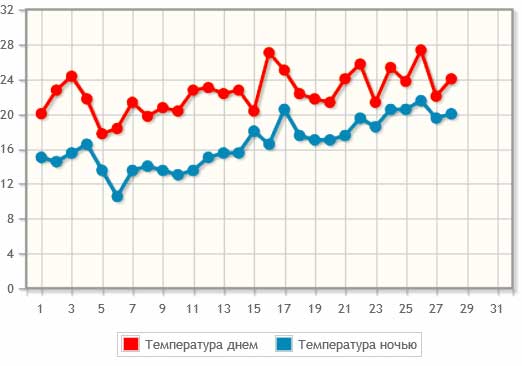
In the afternoon in February 2015, the highest temperature reached almost 28 °C, the minimum – 18 °C. At night, the minimum temperature dropped to 10 °C, and the maximum heat level was recorded at 21.5 °C.
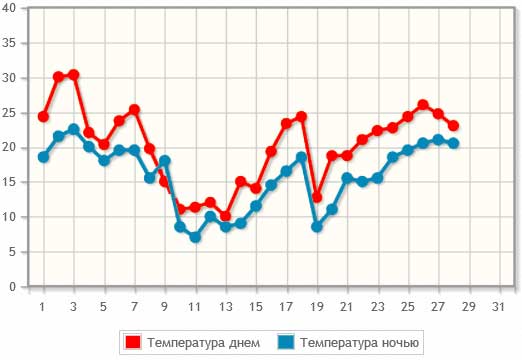
February 2014 turned out to be abnormally warm and abnormally cold at the same time. The highest daytime temperature was almost 31°C, the lowest daytime temperature dropped to 10°C. As for the night temperature, the minimum mark was recorded at 7°C, and the maximum at 23.5°C.
Hong Kong water temperature in February
The average water temperature in Hong Kong in February 2015 was recorded at 17.9°C.
The maximum temperature is 20.1 ° C.
The minimum temperature is 16.9 °C.
In February 2015, the water was about 2 degrees colder than in the previous two years. For example, in 2014, the minimum temperature was 18.3 °C, and the average was 18.9 °C.
Swimming in Hong Kong in February is still cold.
Precipitation in Hong Kong in February
February in Hong Kong is the second driest month of the year, after January. From year to year, the situation sometimes changes places, and February becomes the driest. Anyway, if you don’t want it to rain, then February is a great month to visit Hong Kong. You won’t need an umbrella.
March. Hong Kong weather in March
March is the first month of spring.
During this period, Hong Kong has a warm and humid climate. Heavy rains and fogs are not uncommon. According to forecasters, there is a certain balance this month: the number of cloudy rainy days is approximately equal to the number of sunny and clear days.
By the middle of March, it is noticeably warmer, and daytime temperatures are kept in the range of +17, +22 degrees. The water temperature off the coast is about 18 degrees Celsius.
March has a fairly high humidity: from 75% during the day to 86% at night. The average monthly precipitation is up to 71.5 mm. The wind is westerly and southwesterly, and monsoon winds are also possible. However, the possibility of tropical hurricanes this month is practically excluded. The relative atmospheric pressure is 762-763 mmHg.
The beginning of spring is a great time to visit the numerous botanical gardens and parks, where a number of rare plants begin to bloom at this time. This includes orchids, of which there are up to 90 species in Hong Kong parks. For example, a magnificent collection of rare species of these plants is collected in a greenhouse located near Hong Kong Park. Moreover, the entrance to the greenhouse is absolutely free.
April. Hong Kong weather in April
In April, mild, slightly windy, warm weather sets in Hong Kong. Rains at this time are less frequent than in March, but their intensity and duration are increasing. Therefore, the precipitation level in April is several times higher than in March and can reach 190 mm with an average monthly daytime relative humidity of up to 76%.
The daytime temperature is set between 20.5 – 25.6 degrees Celsius. The number of hours when the sky is cloud-free and the sun is shining brightly increases from 91 in March to 102 in April. The water temperature rises to +21 degrees.
Strong monsoon winds can blow for no more than 3 days. Thunderstorms often occur in April, they are brought by westerly and southwesterly winds. The wind force in the last month of spring does not exceed 3.2 meters per second.
The average atmospheric pressure level is kept at 760 mmHg.
April is good for hiking and trips. The city’s nightlife is noticeably reviving this month. Fans of extreme sports also face many temptations.
The hang gliding training season begins in April. Their favorite place is the ridge of a mountain range called Dragon’s Back, or “Dragon’s Back.” It is located near the entrance to Shek O Park. Dragon’s Back is an excellent observation deck with an amazing view of Big Wave Bay.
On the 23rd day of the third moon, Hong Kong celebrates the birthday of one of the most revered goddesses in the East – Tin Hau is the main patroness of fishermen and sailors. There are at least three hundred temples dedicated to Tin Hau in China. Therefore, there is nothing surprising in the scale of the celebration: numerous processions, carnivals, dances, performances by Chinese singers and musicians, theatrical shows. It is a real success for a tourist to witness and participate in these celebrations.
May. Hong Kong weather in May
May is considered the first summer month in Hong Kong. It’s getting really hot. Daytime temperatures are increasingly rising to +28, +29 degrees. At the same time, the water temperature stays around +25 degrees. Heavy, long and small short–term rains bring large amounts of precipitation in May, up to 300 mm on average. The relative humidity in the daytime reaches 77-78%. The number of monsoon winds is reduced to a minimum, but there is a possibility of the arrival of tropical cyclones.
The number of clear and sunny days is noticeably increasing: May provides up to 140 hours filled with sunshine and warmth.
Atmospheric pressure is about 757 mmHg.
May is the ideal time for visiting beaches, sailing, jet skiing and catamarans, and, of course, diving.
Experienced divers recommend paying attention to places such as the Breaker Reef area, where during low tide periods at a relatively shallow depth you can see luxurious coral “thickets” and meet quite rare inhabitants of the underwater kingdom. Another good place for diving is East Ping Chau Island, an area where unique coral species grow and sea turtles live. Hoi Ha Wan is ideal for night diving and underwater photography.
June. Hong Kong weather in June
June is a hot month. Daytime temperatures rise to 31-33 degrees. At night, it rarely drops below +26. At the same time, the water temperature is +26.3; +27 degrees. The month is characterized by high humidity – up to 76% during the day and 86% at night – due to heavy tropical rains. The precipitation level is from 288 mm.
The monsoon season is ending. The wind changes direction. And in June, winds from the northeast come to Hong Kong more and more often.
In addition, June is the time of the onset of tropical cyclones. Most often this month they are quite weak and do not bring troubles and destruction. The exception is Typhoon Meggie, which struck Hong Kong on June 8, 1999. The Maggie, which had a speed of at least 140 km per hour, raged for about a week. As a result, 4 Hong Kong residents were injured. In addition, the typhoon caused a collision between two oil barges.
But the June “Maggie” sal is rather an exception to the rule: June usually remains one of the most peaceful months in Hong Kong.
June is good for beach holidays and all kinds of water sports.
The beaches of Hong Kong are quite comfortable. There are about 4 dozen of them in total. They are located in places as far away from noisy highways and processing plants as possible. Hung Xin Ye Beach, located on Lamma Island, is recognized as one of the best beaches. The beaches of the island are known not only for the purity of the waters and the softness of the sand, but also due to the strictest ban on movement around the island in cars with gasoline engines.
July. Hong Kong weather in July
The weather in July practically does not differ from the weather in June: the maximum daytime temperatures are + 32, + 33 degrees, at night – +26, +27 degrees. The wind direction is westerly and northeasterly. The precipitation level is 375 mm, the relative humidity is from 76%. Atmospheric pressure is 755 mmHg.
The tropical hurricane season continues in July. Basically, these winds don’t create any problems. However, Hurricane Nadezhda in 1997 paralyzed the city’s life for almost a week. His speed was at least 240 km per hour. About a hundred people died or went missing in China during the week when the typhoon raged on the streets. Hong Kong suffered only minor damage.
Like June, July in Hong Kong is ideal for relaxing on the beaches and strolling through the shady parks.
August. Hong Kong weather in August
August is perhaps the most inhospitable month in Hong Kong. This is the peak of the tropical rainfall season. Daytime heat and high humidity are quite difficult to tolerate. On average, the daytime temperature stubbornly stays at +31, +36 degrees. At night, the thermometer rarely drops below +26. The water temperature is +26.4; +27 degrees.
It rains for most of the month. As a result, about 445 mm of precipitation falls in August. Relative humidity ranges from 75 to 86%.
In addition, in August, the frequency of tropical hurricanes increases as much as possible and there is a threat of the arrival of powerful typhoons.
Hong Kong still remembers the destructive power of Typhoon Rosa, which struck Hong Kong on August 10, 1971. The wind speed sometimes reached 220 km per hour. The typhoon hit the Philippines, the Eastern Provinces of China and Hong Kong. As a result of the disaster, about 130 people died and went missing, at least 300 boats and small vessels sank, and more than 5,000 people were left homeless. As a result of the fire at one of the substations caused by the Rose, thousands of people were left without electricity for a long time. Due to a strong storm triggered by the typhoon, the Hong Kong-Macau ferry sank, causing the deaths of 88 more people.
The consequences of another typhoon, Helene, which arrived in Hong Kong on August 29, were also terrible. As a result, six people were killed and 277 injured.
It is not surprising that in August, life on the city streets freezes. Many city enterprises are suspending their work. However, paradoxically, the influx of tourists to Hong Kong does not stop in August. Perhaps the whole point is that it is in August that the second wave of discounts on a wide variety of goods begins: from appliances to real branded couture clothing.
September. Hong Kong September weather
After the sultry and humid August, September brings relative coolness. In addition, in September, precipitation decreases almost twice and humidity decreases.
Daytime temperatures in September: +26, +28 degrees Celsius. The water temperature is +26.5 degrees. The average monthly precipitation is 288 mm with a relative humidity of 73-82%. Atmospheric pressure is 757 mmHg.
Monsoons are starting to blow from the sea again. In addition, strong hurricanes and typhoons are still likely to arrive in September.
Among the most powerful hurricanes that have raged in Hong Kong over the past century, September saw the visits of typhoons Rub, which began on September 1, 1964 and claimed more than 730 lives, Wanda, which killed about four hundred people, and Typhoon York in 1962.
However, nowadays, thanks to modern communication systems and equipment that can accurately predict the appearance of another typhoon and take all necessary safety measures in advance, it is possible to minimize the degree of destruction and prevent the appearance of new human casualties.
Therefore, the number of people wishing to visit Hong Kong does not decrease in September. Moreover, the September climate is favorable for visiting parks and nature reserves, relaxing on the beach, playing beach sports, playing golf and evening walks around the city.
October. Hong Kong October weather
October is considered one of the most suitable months to visit Hong Kong. At this time, the air temperature ranges from +23 to +28 degrees Celsius. The water off the coast is never colder than +26 degrees.
The precipitation level is significantly reduced and does not exceed 152 mm. The air humidity is only 66-78%. Monsoons and westerly winds blow more often, with a speed of no more than 3 m per second. The passage of rather weak tropical cyclones is possible. No more than 10 rainy and cloudy days are usually recorded during October. Atmospheric pressure in February is 760 mmHg.
October is favorable for visiting beaches, short walks around the city, visiting local attractions and practicing water sports. As well as for equestrian sports and cycling, which can always be rented in Hong Kong.
That’s all.
I always wear a jacket in Hong Kong, even at +35, so it’s cold in taxis and kick-ass rooms – it’s easy to catch a cold!
Alex iurlov tour guide in Hong Kong, Macau and China
Car transfers, yacht charters.
+85268553629 (WhatsApp, Telegram, Wechat)
Wechat id: iurlov
info@hongkong.su
www.hong-kong.su
www.tour.hong-kong.su
www.yachts.hong-kong.su
www.alphard40.hk
www.yurlov.com – my personal web site